
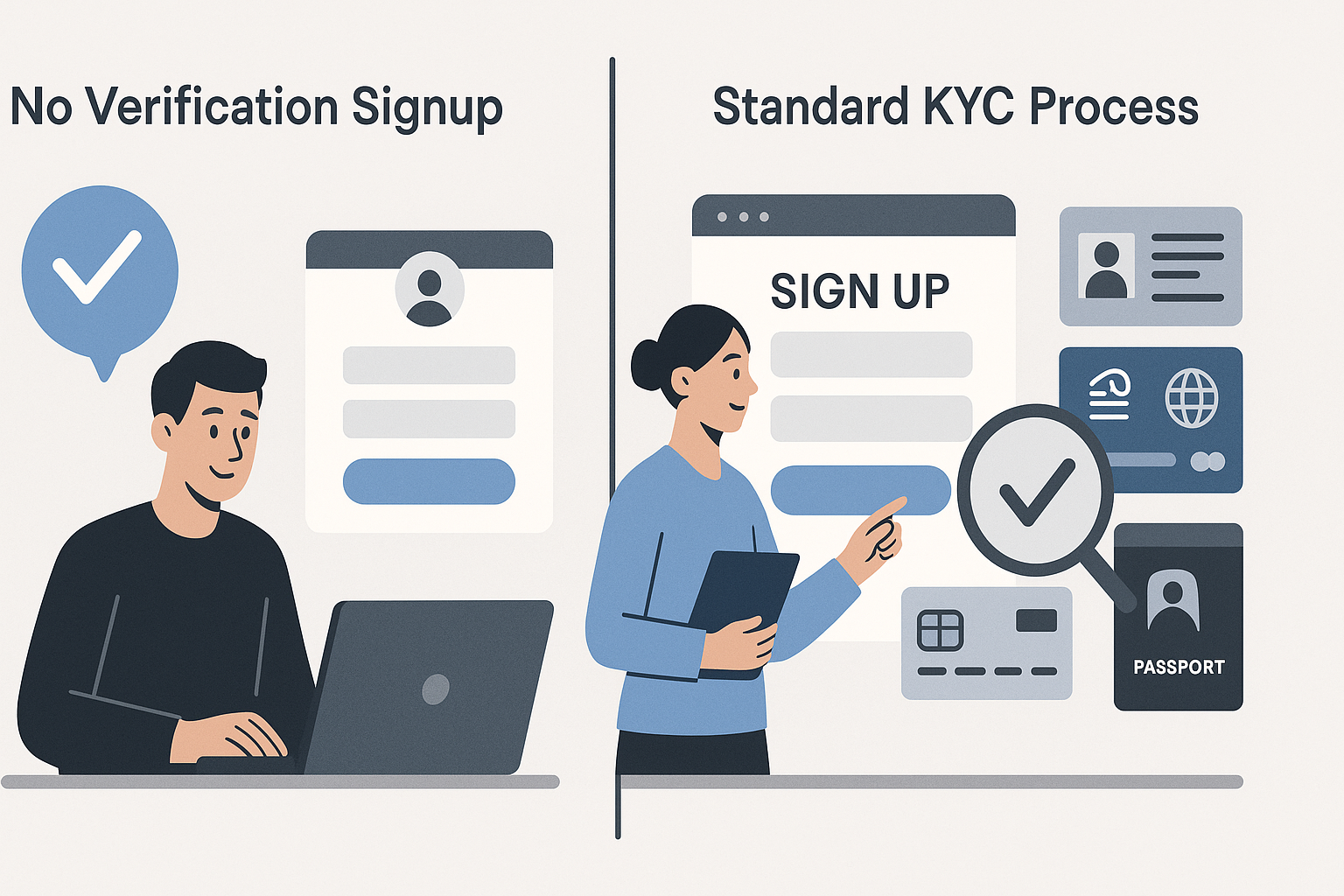
Understanding No Verification Signup vs Standard KYC Process
When creating accounts on financial platforms, cryptocurrency exchanges, or online services, users typically encounter two different approaches to identity verification. The first is a no verification signup process that allows immediate access with minimal personal information. The second is a standard Know Your Customer (KYC) process requiring comprehensive documentation and identity checks. Each approach carries distinct characteristics, benefits, and limitations that users should understand before choosing a platform.
What Is No Verification Signup?
No verification signup refers to account creation processes that require little to no identity documentation. Users typically provide only basic information such as an email address or username and a password. The account becomes active immediately or within minutes, allowing users to begin using the service without waiting for approval or submitting identification documents.
This approach is commonly found on certain cryptocurrency platforms, peer-to-peer exchanges, decentralized applications, and some international services. The primary appeal lies in speed and privacy, as users can access services without sharing sensitive personal information.
Typical Requirements for No Verification Accounts
- Email address or phone number
- Username and password creation
- Basic security setup (two-factor authentication optional)
- Agreement to terms of service
What Is the Standard KYC Process?
KYC, or Know Your Customer, is a regulated verification procedure that financial institutions and many online platforms use to confirm user identities. This process stems from anti-money laundering (AML) regulations and counter-terrorism financing requirements established by governments worldwide. Standard KYC procedures involve multiple verification steps and can take anywhere from several minutes to several days to complete.
Common KYC Requirements
- Government-issued photo identification (passport, driver's license, or national ID card)
- Proof of address (utility bill, bank statement, or rental agreement)
- Selfie or live photo for facial recognition matching
- Personal information including full name, date of birth, and residential address
- In some cases, employment information or source of funds documentation
Key Differences Between the Two Approaches
Speed and Accessibility
No verification signups provide immediate access, which can be particularly useful for users who need quick account creation. Standard KYC processes require time for document submission, review by compliance teams, and approval, which may range from a few hours to multiple business days depending on the platform and verification level required.
Privacy Considerations
Users who prioritize privacy often prefer no verification options because they avoid sharing government-issued identification and personal details. KYC processes, by contrast, collect substantial personal information that platforms must store and protect. This creates a trade-off between privacy and regulatory compliance.
Transaction Limits and Features
Platforms offering no verification signups typically impose strict transaction limits. Users might face daily or monthly withdrawal caps, restrictions on transaction amounts, or limited access to certain features. KYC-verified accounts generally enjoy higher limits, access to advanced trading features, and the ability to move larger amounts of funds.
Security and Account Recovery
Standard KYC processes provide stronger account recovery options since the platform has verified identity documentation. If a user loses access credentials, the platform can verify identity through the submitted documents. No verification accounts offer limited recovery options, and losing access often means permanently losing account contents.
Regulatory Compliance
KYC-compliant platforms operate within established regulatory frameworks, which provides users with certain legal protections and recourse options. No verification platforms may operate in jurisdictions with minimal regulatory oversight or face potential legal challenges. Users should consider the implications of using services that may not comply with their local regulations.
Practical Considerations for Users
Choosing Based on Use Case
The appropriate choice depends on individual needs. Users seeking to test a platform, make small transactions, or maintain maximum privacy might initially prefer no verification options. Those planning significant financial activity, requiring customer support, or wanting regulatory protections should consider KYC-verified platforms.
Understanding Geographic Restrictions
Standard KYC processes often involve geographic restrictions, as platforms must comply with different regulations in different jurisdictions. Some regions may be entirely excluded from certain services. No verification platforms may appear more accessible but could still operate in legal gray areas depending on the user's location.
Evaluating Platform Legitimacy
Both approaches exist on legitimate and questionable platforms. Users should research platform reputation, operational history, user reviews, and regulatory status regardless of verification requirements. The presence or absence of KYC alone does not determine platform legitimacy or safety.
Making an Informed Decision
Users should assess their priorities regarding privacy, transaction needs, regulatory compliance, and risk tolerance. Understanding local regulations applicable to financial services and cryptocurrency transactions is essential, as using non-compliant platforms may carry legal consequences.
Consider starting with lower-stakes transactions to evaluate platform functionality and reliability before committing significant resources. Maintain appropriate security measures such as strong passwords and two-factor authentication regardless of verification level. Remember that personal responsibility for researching platforms and understanding associated risks remains with the user.
Both no verification and standard KYC processes serve different user needs and operate under different frameworks. The choice ultimately depends on individual circumstances, intended use, and willingness to share personal information in exchange for higher limits and regulatory protections.